Parallel Parenting vs. Co-Parenting: Which One You Actually Need
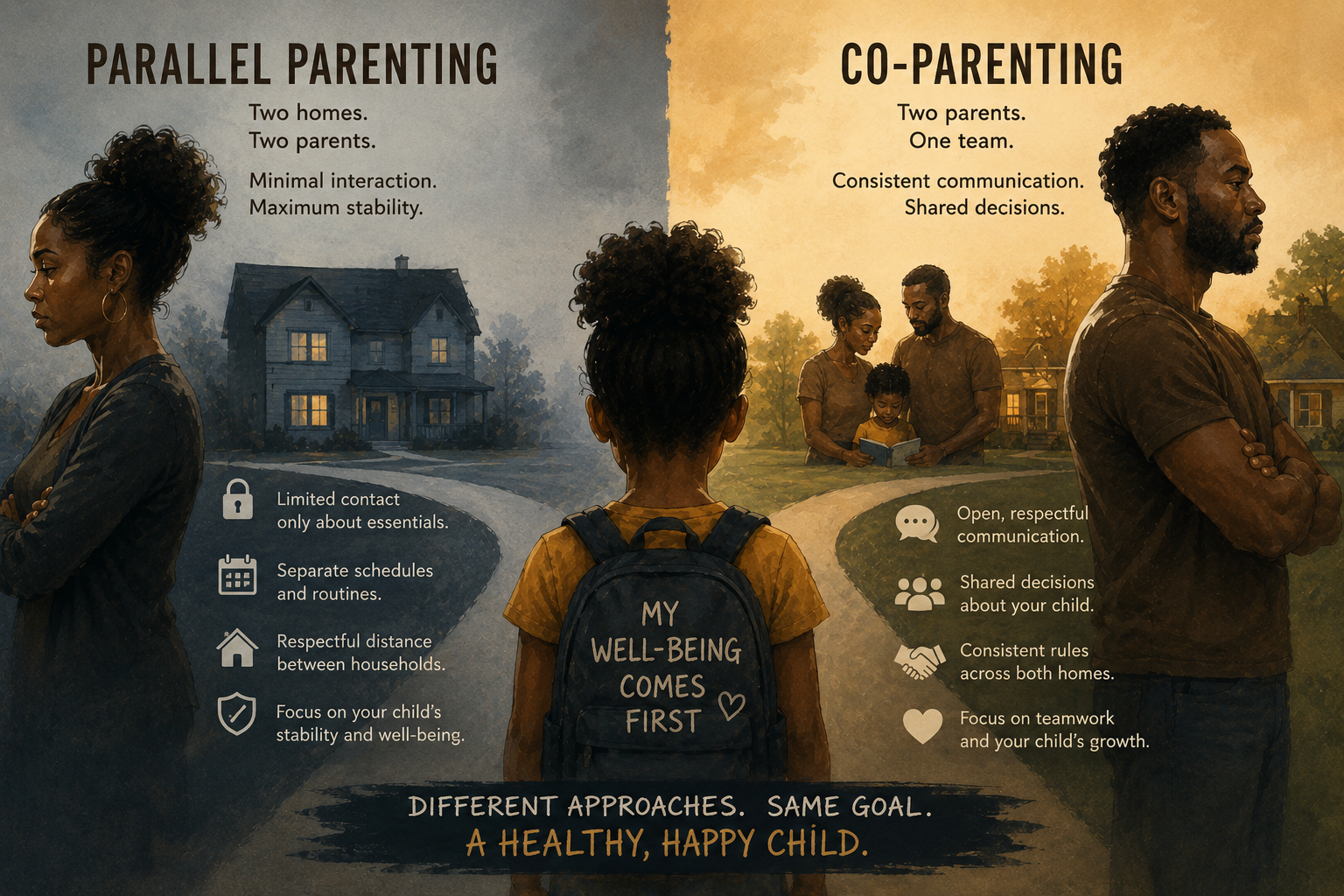
After separation, most people say they want "co-parenting": working together for the kids. The word assumes partnership, communication, and some goodwill.
For many families, that's realistic. For others, especially when one parent is high-conflict, manipulative, or there's a history of abuse, forcing a cooperative model keeps the fight alive.
Parallel parenting exists for that second group. Here's how to tell which you need and what parallel parenting looks like day to day.
Courts and parenting coordinators sometimes recommend parallel structures when conflict won't budge. Choosing it isn't admitting defeat. It's matching the structure to the reality so the children see less fighting.
What Co-Parenting Assumes
Traditional co-parenting usually assumes:
- Both parents can talk with basic civility
- Both can put the children's needs above grievances
- Joint decisions aren't constantly overridden
- Information is shared honestly, not weaponized
- Agreements are honored
When that holds, kids see adults who can communicate and logistics stay manageable.
When it doesn't, "co-parenting" becomes a schedule for more conflict, more manipulation, and more harm to you and the children.
What Parallel Parenting Is
Parallel parenting was built for high-conflict separations. The goal: as little direct contact as possible so each parent can run their home without the other's interference.
The kids have two households. Each parent parents on their time within what the order allows. Contact between adults is minimal, formal, and logistics-only.
"Parallel" on purpose: like parallel lines, you're near each other but don't have to intersect. You don't need to like each other or agree on most things. You need to follow the plan.
Signs You Need Parallel Parenting
Every contact becomes a fight. If schedule emails reliably explode into accusations, the channel itself is the problem.
"Co-parenting" is cover for harassment. Drop-offs as scenes. Logistics as character attacks. Less contact, not more pep talks, is the fix.
Joint decisions don't actually happen. One parent stalls, refuses, or only accepts outcomes that favor them. You need clearer spheres where each parent decides inside their home.
The kids keep absorbing the conflict. If cooperation attempts still expose them to fighting, lower contact protects them.
You've tried the softer options. Good-faith talks, coordinators, mediation, and the pattern holds. That's data. Parallel parenting isn't failure; it's realism.
You're spending more energy on conflict than on parenting. If co-parenting contact eats your week and your kids still feel the tension, reducing contact can free bandwidth for actual parenting in your home.
What It Looks Like in Practice
Written, minimal, one channel. OurFamilyWizard, TalkingParents, or email. Not random texts, not calls, not through the children. One archive both sides share.
Messages stay BIFF: Brief, Informative, Friendly, Firm. "Pickup Friday 5 PM." "Pediatrician Tuesday 3:30." "Requesting schedule change March 15; please confirm by Thursday." Not therapy, not rehashing last year's argument.
Structured exchanges. Same place, same time, as little contact as possible. Curbside handoffs. School as the exchange point so you aren't on the same doorstep.
Autonomous households. Within the order, you run your home your way. You don't need to police their dinners or homework on their time. Some alignment on basics (bedtime in a sane range, gear in both bags) is enough.
Major calls follow the order, not endless negotiation. Health, school, activities: use what the decree says. If joint legal custody requires agreement, the plan should name how (coordinator, mediator, tie-break). Not open-ended talks that become weapons.
Expenses and medical bills: Use the app's expense log when disputes are frequent. Parallel parenting still requires financial transparency where the order says so; it just reduces the casual back-and-forth that turns into fights.
Grey Rock fits here. Minimal contact plus flat, factual replies is the day-to-day skill set most parallel parents use on the app.
What Parallel Parenting Is Not
Cutting the other parent out of the children's lives. Emergencies, serious school issues, and safety still require contact. It's just structured and documented.
Using the kids because adults won't talk. Parallel parenting protects children from conflict. Messages through them, intel-gathering, or logistics via the kids is the opposite.
Forever. Many families move toward more cooperation as orders settle and kids age. It's a fit for now, not a life sentence.
Getting a Parallel Parenting Plan
If your current order isn't working, ask your attorney about a parallel plan through negotiation, mediation, or court.
A strong plan usually specifies:
- Communication channel and response window
- Exchange location, time, and transport
- What each parent controls inside their home
- How major decisions get made when agreement is required
- Escalation when you can't resolve a dispute
High-conflict attorneys and courts often order these structures because reducing parental conflict is the point.
If you're not sure whether a message is normal friction or a tactic worth documenting, run it through DARVO.app/analyze before you answer.
Kids and two different households: Parallel parenting accepts that rules and routines won't match perfectly. Focus on safety, sleep, school, and medical continuity. Let go of controlling their snacks or screen time on the other parent's days unless the order or a real harm issue applies.
When the other parent calls you "uncooperative": Less contact can look like refusal if you never respond on the app. Respond to real logistics promptly on the record. Ignore provocation. That combination reads as structured cooperation, not withdrawal.
School and medical: Parallel parenting still requires both parents to get information schools and doctors are required to share. Use the app to confirm who attends which appointment, not to micromanage the other home's dinner menu.