Male Survivors of Narcissistic Abuse: Why It Looks Different and Why It's Harder to Name
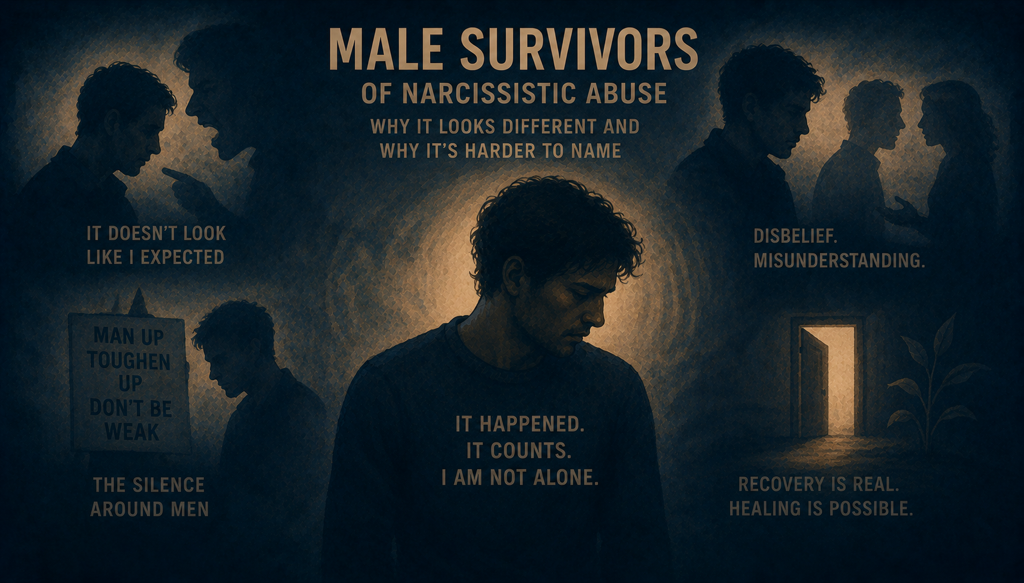
The dominant image of narcissistic abuse, and much of the community built around it, skews toward women as survivors and men as abusers. That reflects a real pattern: women are more likely to be victims of intimate partner violence and coercive control. It's also an incomplete picture that leaves many male survivors without language for their experience, without validation from their communities, and often without recognizing it in themselves.
Male survivors of narcissistic abuse exist in meaningful numbers. They face specific obstacles to naming what happened and seeking help.
Why Men Are Less Likely to Name It
The cultural script runs in one direction. Men are taught to be strong, handle things, not be victims. The idea that a man was manipulated, controlled, or psychologically harmed by a partner or parent runs against messaging most men received for their entire lives. Even men who understand the dynamics intellectually often struggle to apply the framework to their own situation.
The behaviors read differently. When a woman in a controlling relationship limits her partner's social contacts, monitors his communications, and uses emotional withdrawal as punishment, outsiders may find it harder to see as abuse. Coercive control that's visible in one gender direction can be invisible in the other.
Men don't seek help at the same rates. For mental health issues generally, men are less likely to seek therapy, talk to friends about emotional struggles, or engage community support. The narcissistic abuse recovery community (forums, podcasts, groups, content) is overwhelmingly oriented toward women survivors, which can make it feel inaccessible or irrelevant to men.
The physical power dynamic cuts the other way. Because men are typically physically stronger than women, the threat of physical danger reads differently, even in relationships where emotional abuse is severe. Men may not recognize their situation as abuse partly because the physical threat goes in the other direction.
How It Looks for Male Survivors
The core dynamics of narcissistic abuse are the same regardless of gender: idealization, devaluation, gaslighting, intermittent reinforcement, erosion of selfhood. What differs is often the specific tactics and the vulnerabilities they target.
Emasculation as a weapon. Criticism of competence, sexual performance, financial provision, or role as father or partner, aimed at areas tied to masculine identity and self-worth. Often delivered in ways that are hard to name: disguised as concern, wrapped in other content, plausibly deniable.
Using the children. In co-parenting after separation, fathers are statistically more likely to lose primary custody, which provides a specific lever. Threats involving children (reduced access, poisoning the relationship with the father, false allegations) hit hard when fatherhood is central to identity.
False allegations. Male survivors of female narcissistic abusers are more likely than female survivors to face false allegations of abuse, domestic violence, or sexual misconduct. Whether filed with law enforcement or raised in family court, these allegations can leverage systems that are statistically more likely to believe female accusers. DARVO applied through institutional mechanisms is particularly effective in this direction.
Social isolation through embarrassment. Men in abusive relationships are often reluctant to tell friends or family because of anticipated responses: confusion, dismissal, jokes, cultural discomfort around male victimhood. Isolation compounds gaslighting when there's no external reality check.
Financial abuse toward men. Controlling resources, running up shared debt, using financial dependency as leverage happens regardless of gender. For men, there may be added shame around financial control by a female partner.
Specific Challenges in the Recovery Phase
Disbelief from systems men turn to. Police, courts, therapists, and other supports often carry implicit biases that make it harder for men to be taken seriously as abuse victims. Family courts have historically been more likely to believe allegations made by women than by men.
Limited peer community. The narcissistic abuse recovery community is largely built around women survivors. Men who engage often find content only partially applicable and spaces that can feel unwelcoming.
Shame. Male socialization around strength, competence, and not-being-a-victim produces specific shame around having been abused. That shame can prevent help-seeking, clear naming, and the compassion men might extend to a female friend in the same situation.
What Helps
The same things that help all survivors help male survivors, with attention to the specific obstacles.
Finding a therapist with experience in both narcissistic abuse and male socialization is valuable. A therapist who assumes female-survivor frameworks may not address the specific dimensions of male experience.
Online communities specifically for male survivors exist, though they're smaller and harder to find. MaleSurvivor.org and similar organizations provide resources, though many focus primarily on childhood sexual abuse rather than adult relationship abuse.
Building toward documentation, legal protection where relevant, and trusted support outside the relationship is practical. The same advice applies regardless of gender, with attention to the specific legal landscape for male victims in co-parenting disputes.
Most importantly: you're allowed to name it. What happened to you has a name. The gender configuration doesn't change the pattern.
If messages from your ex leave you doubting your read on what happened, paste them into DARVO.app/analyze. The tool flags manipulation tactics in plain language without requiring you to argue your case in the thread.