What to Do When Your Co-Parent Ignores the Parenting Plan

You thought the parenting plan would hold. Negotiated, signed, maybe court-ordered. Structure that didn't depend on their goodwill.
Then they started doing whatever they wanted anyway.
Late pickups. Silent decisions. Schedule changes announced, not requested. The document says one thing; their behavior says another.
You can respond in a way that protects your kids and builds a record that holds up, without handing them ammunition. The goal isn't to win the argument in the thread. The goal is to stay steady, stay factual, and let the paper trail speak when you need it to.
The Critical First Step: Know Your Plan Cold
Before you document violations, know exactly what the plan says. Pull up the PDF. Read the pickup times, decision-making clauses, and communication rules line by line.
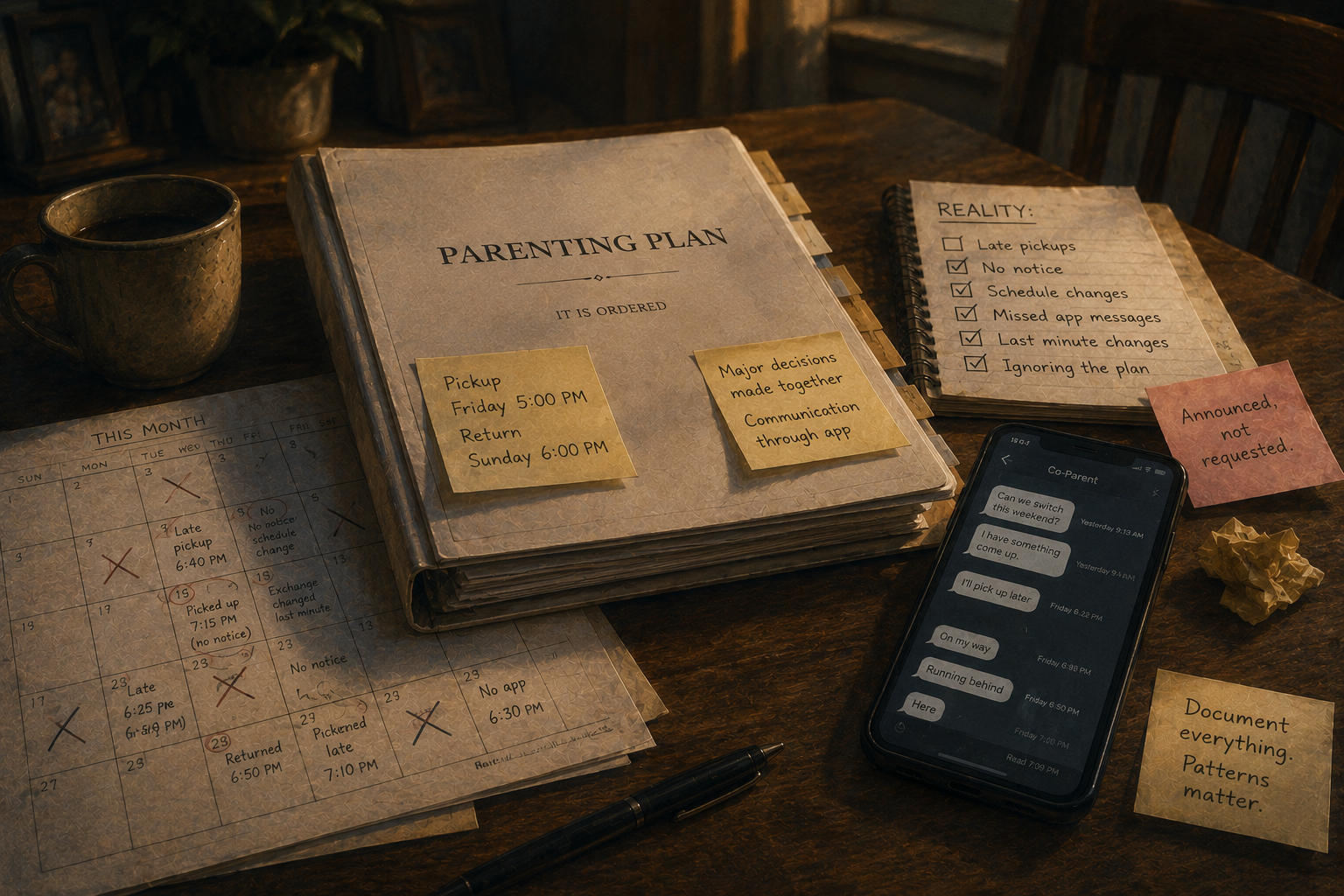
"They're difficult about the schedule" won't help you in court. "The plan says Friday pickup at 5:00 PM; pickup was 6:40 PM on [date]" will.
Document Every Violation Immediately
Same day, ideally same hour: write it down. Date, time, what the plan requires, what happened, witnesses, and any messages about it.
Keep a chronological log on your personal device (a private doc is fine). If it happened on your co-parenting app, save the message and timestamp. For pickup issues, note how late and whether they warned you.
One late handoff is an incident. Ten documented late handoffs over three months is a pattern. Judges and attorneys work with patterns.

Address It Once, In Writing, Through the App
After you log it, send one clear message on your documented channel:
"The parenting plan specifies pickup at 5 PM on Fridays. This past Friday, pickup was at 6:40 PM. Please plan for 5 PM going forward."
No lecture. No history lesson. No venting. One fact, on the record.
If they reply with excuses, attacks, or a new accusation, log that too and don't chase the drama. Answer only real logistics if there's a real question buried in it. A reply that turns into a character attack still counts as documentation. You don't need to correct every lie in real time.
When their reply feels designed to bait you or flip the script, paste the thread into DARVO.app/analyze before you answer. You'll see which tactics are in play and get wording that stays brief and court-safe. That pause alone can keep you from sending the message you'll regret.
Screenshots help, but timestamped app exports and your written log are usually stronger than a camera roll of partial threads. Ask your attorney what format they prefer before you build months of the wrong kind of record.
Do Not Retaliate in Kind
When they break the plan, matching them (showing up late yourself, withholding info, making a solo decision) can feel fair. It also gives them material to use against you.
Courts compare both parents. The one who follows the order and documents violations looks different from the one who trades violations back and forth. That contrast is evidence.
Follow your plan every time. Log their breaks. Don't supply theirs.
Consult Your Attorney Before Escalating Formally
Before you file a motion or rush to court, talk to your family law attorney. They can tell you whether your log is strong enough, whether mediation is required where you live, and whether contempt, modification, or something else fits.
Legal moves without legal advice can waste money and hurt your position.
When to Move Toward Formal Action
Not every slip needs a court filing. Proportionality matters for your wallet and your case.
Keep documenting and one-line reminders when:
- Violations are small (15–20 minutes late, missed app check-ins)
- The pattern is new and might correct
- You don't yet have enough entries to show a trend
Call your attorney when:
- Violations repeat and your log shows a clear pattern
- They're serious (missed parenting time, major decisions without you, kids returned upset)
- Your written reminders are ignored or met with escalation
- You have documentation that the children's wellbeing is affected
Act immediately when:
- Children are at safety risk
- They're threatening to or have taken kids outside the agreed area
- Children are being withheld beyond what the plan allows
Keep Your Children Out of It
Your kids don't need the legal blow-by-blow. They don't need to hear you vent about the other parent.
"Grown-up stuff we're handling" is enough for most ages. Handle the dispute through adults and apps, not through them.
The Long View
Following the plan while they don't can feel like you're doing all the work and they're doing none. That imbalance is real in the short term.
Over time, your log tells a story: one parent consistent with the order, one parent repeatedly off it. Courts read that story.
Build the record. Stay proportional. Don't escalate for sport. You're playing for the hearing that may be months away, not for the satisfaction of being right in today's text.
If you're unsure whether a message is a violation, a guilt trip, or just sloppy co-parenting, run it through DARVO.app/analyze before you decide your next move. Clarity on the tactic helps you choose documentation over reaction.