How Narcissistic Co-Parents Use the Children's Therapist Against You
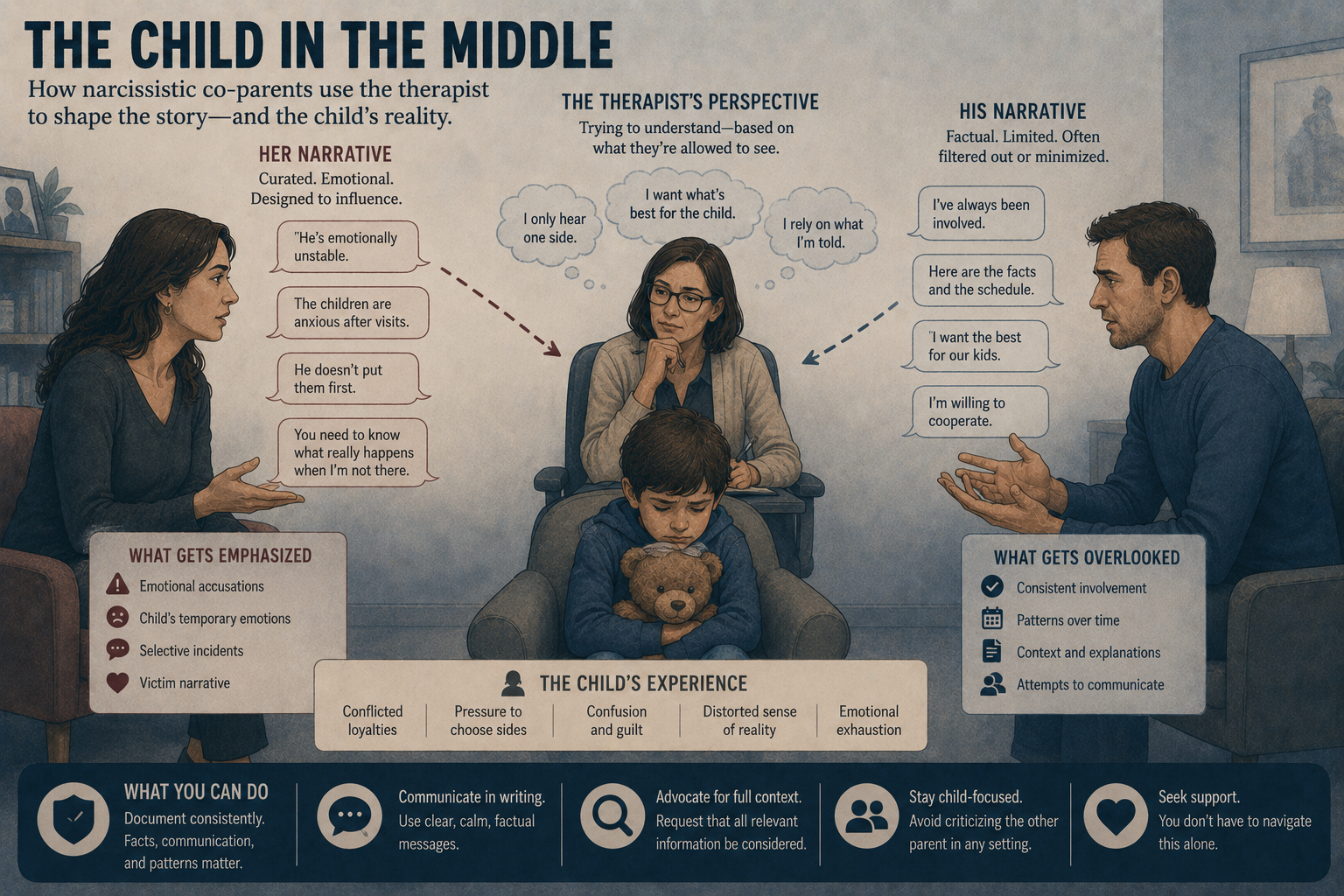
Your child's therapist is supposed to be a neutral professional focused on your child's wellbeing. In high-conflict co-parenting, that therapist can become another front in the conflict: targeted, influenced, sometimes weaponized, without ever meaning to be.
This isn't about bad therapists. It's about a pattern that shows up when one co-parent is high-conflict, and knowing it exists helps you respond appropriately.
How It Starts
The relationship usually begins at intake. One parent, often whoever initiated therapy and has more daytime flexibility, gets more early access. They present the context, explain what's happening, frame what the child needs.
That first framing shapes what follows.
A narcissistic or high-conflict parent is often effective in professional settings: articulate, composed, concerned. They look like the parent worried about the child and trying to get help. The account they give includes their account of you.
By the time you have contact with the therapist, the frame is often set.
Common Patterns
Loading the therapist with a one-sided narrative. The other parent spends parent consultations (or between-session calls) presenting you as the problem: unstable, uncooperative, abusive, alienating. The therapist hasn't observed it. They've been told it. Hearing only one version consistently shapes perspective.
Using the child as a vehicle. Children in play therapy process what's happening at home. A parent who coaches before sessions (planting concerns, framing events, expressing distress about you in ways the child absorbs) is effectively scripting therapy.
Misrepresenting what the therapist said. "The therapist agrees you're the problem." "The therapist thinks the children need more time with me." Unless you've spoken directly to the therapist, you can't verify these claims. They may be fabricated, exaggerated, or selectively presented.
Attempting to exclude you from communication. Requesting the therapist communicate only with them, presenting as primary parent, making it hard for you to have your own contact.
Using therapy notes or statements in legal proceedings. In custody disputes, therapist observations and reports can become evidence. A therapist given a one-sided account of your parenting may produce notes that reflect that account.
How to Protect Yourself and Your Child
Establish your relationship with the therapist directly and early.
Contact the therapist yourself, by phone or email, early in the process. Introduce yourself. Express interest in your child's wellbeing. Ask how parent communication is handled and how you can stay informed within confidentiality rules.
This isn't undermining the other parent. It's establishing that you're also a present, invested parent with access to the professional.
Clarify consent and communication rights.
Both legal parents typically have rights to access their child's mental health information and communicate with the therapist, absent a court order restricting that. If the other parent is trying to exclude you, discuss it with the therapist and, if needed, your attorney.
Provide your perspective — once, clearly.
You don't need a campaign. One clear, professional communication explaining your perspective on family dynamics, co-parenting, and concerns about what the child may present is appropriate. Keep it factual. No character attacks. Let the therapist draw conclusions.
Don't coach your child about therapy.
Ethically right and strategically important. A coached child is a red flag to any competent therapist. Let your child process their experience. If they bring home therapy content, receive it warmly without interrogating.
If the therapist seems compromised, consult your attorney.
If the therapist appears to have accepted a heavily one-sided narrative and is producing reports that reflect that narrative rather than independent clinical assessment, talk to your attorney. Requesting a new therapist, or raising concerns with a guardian ad litem or custody evaluator, may be appropriate.
Consider requesting a parenting coordinator.
A parenting coordinator is a neutral professional (often an attorney or mental health provider) appointed to help manage co-parenting disputes. Having one in place can reduce the therapist's role as de facto referee and create a more appropriate channel for those fights.
A Word on Good Therapists
Many children's therapists who work with high-conflict families know these dynamics and aren't easily manipulated. A skilled clinician notices coached responses, seeks balanced input from both parents, and stays appropriately skeptical of single-party narratives.
If your child's therapist meets with both parents, seeks balanced input, and maintains clinical independence, that's a good sign. Work with them honestly.
This post is about the pattern when it goes wrong, not an indictment of children's therapists generally. Most are trying to help. Understanding manipulation helps you participate constructively.
If your co-parent's messages about therapy sessions feel like DARVO or smear-building, paste them into DARVO.app/analyze before you respond on the app or in email.